Li Tang
Overview
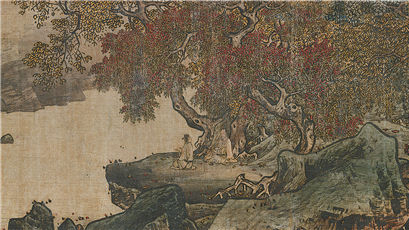
Li Tang was a prominent artist of the Southern Song Dynasty (1127-1279), one of the "four great painters" alongside Liu Songnian, Ma Yuan, and Xia Gui. Renowned for his innovative contributions to Chinese landscape painting, Li Tang's work marked a significant evolution in the visual arts during his time. His artistic style helped transition from the "panoramic-view structure" of the Northern Song Dynasty (960-1127) to a more focused approach that played a pivotal role in shaping the aesthetic landscape of Chinese painting.
Artistic Contributions
Southern Song Dynasty Influence
Li Tang's artistry flourished during the Southern Song Dynasty, a period when Hangzhou served as the imperial capital and became a hub for cultural and artistic innovation. The Southern Song painters, particularly those associated with the imperial academy of painting, cultivated a distinct style marked by meticulous brushwork and an elegance that set the era apart. This period saw artists immersed in the natural beauty of the Jiangnan region, capturing the ethereal landscapes of Hangzhou and its surroundings.
Evolution of Style
Li Tang's work is characterized by a shift from the comprehensive panoramic compositions typical of the Northern Song to a more intimate partial-focus layout. This approach concentrated detail within specific sections of the painting, leaving other areas sparsely adorned, effectively utilizing negative space to create a striking contrast between presence and absence. Such innovations in composition and technique were instrumental in developing what would be known as the "Ma-Xia school," named after his contemporaries Ma Yuan and Xia Gui, who embraced similar stylistic transformations.
Legacy and Influence
Li Tang's pioneering techniques and aesthetic sensibilities have exerted a long-lasting influence on Chinese art. His work exemplifies the intricate balance between detailed representation and minimalist abstraction, a hallmark of Southern Song landscape painting. By infusing his compositions with a sense of tranquility and vastness, Li Tang's paintings not only reflect the physical landscapes but also convey profound philosophical themes rooted in Confucianism, celebrating nature's harmony and its spiritual significance. Article reference1. Landscape of the imagination. chinadaily.com.cn. 2023Photo Gallery(1 picture)CategoriesArtsTagChinese PaintingArtistsHistorical FiguresRelatedLiu SongnianCatalogue1. Overview2. Artistic Contributions- - - []








